
Buyer’s guide · 2026
In a competitive talent market, your recruitment website is more than a job board – it’s your brand, your applicant funnel, and often a candidate’s first impression of you. Whether you’re an agency, a startup, or an HR team at a growing company, the right platform improves hiring efficiency, reduces costs, and lifts the candidate experience. Here’s how to choose one.
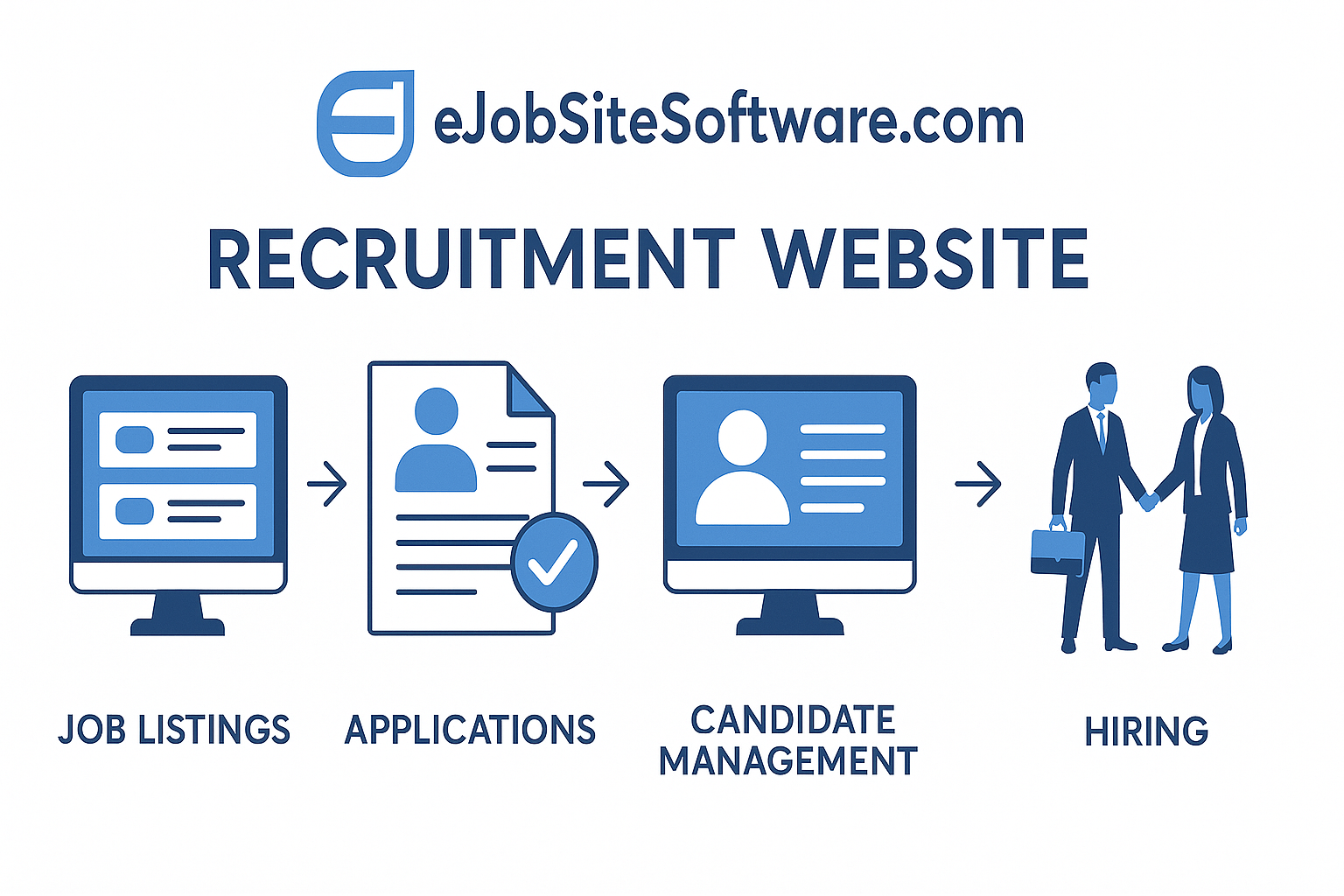
What is a recruitment website?
A recruitment website is a ready-to-use or customisable platform that helps a company or agency post job listings, manage candidate applications, create branded career pages, automate hiring workflows, and track recruitment metrics.
These platforms come in a few different shapes – SaaS, white-label, or bespoke development – depending on the needs and scale of the client. The rest of this guide walks through how to tell them apart and choose well.
Step 1 · Features
Key features to look for
A modern recruitment website should be scalable and AI-driven. These are the seven feature areas that keep a platform competitive.
AI & automation
- Resume parsing and matching algorithms
- Smart candidate screening
- Automated emails and interview scheduling
Branded career site builder
- Customisable templates
- Mobile-responsive design
- Employer branding tools – videos, testimonials, logos
Job distribution & aggregation
- Integration with sites like LinkedIn, Indeed and Monster
- Google for Jobs optimisation
ATS integration
- Built-in or third-party integrations
- Candidate workflow stages
- Reporting dashboard
Employer & jobseeker portals
- Employer account for job posting and tracking
- Jobseeker account to manage applications
SEO optimisation tools
- Clean URLs
- Meta tags and schema markup
- XML sitemaps for indexing
Security & compliance
- GDPR-compliant data handling
- Role-based access
- SSL encryption
Why it matters
Top benefits of a recruitment website
Partnering with the right platform can meaningfully raise your recruitment game.
Faster hiring cycles
Better candidate experience
Scalability as your team grows
Access to niche talent pools
In-depth recruitment analytics
AI is reshaping recruitment – automating candidate matching, personalising job recommendations, and streamlining hiring for faster, smarter results. Independent 2024-2025 industry research points to AI recruitment tools cutting time-to-hire by up to around 40%, though real gains vary widely by team and process, so treat any single headline figure as an indicator rather than a guarantee.
Step 2 · Platform type
The three types of recruitment website
The same goal, delivered three different ways – the right one depends on your brand, budget and control needs.
| Type | How it’s sold | Best for |
|---|---|---|
| SaaS recruitment platforms | Monthly subscription, cloud-based, provider-hosted | Teams that want zero infrastructure and a fast start |
| White-label job boards | One-time setup or licence to run your own branded portal | Recruitment agencies and entrepreneurs building their own brand |
| Custom development agencies | Bespoke build, higher cost | Organisations needing a solution tailored to exact specs |
In practice
Real-world use cases
Which type fits which situation – three common scenarios.
Staffing agency
Enterprise HR team
Startup job portal
Step 3 · Pricing
Pricing models explained
Recruitment websites are usually sold one of four ways. Always compare features and support before choosing on price alone.
| Model | How it works | Best suited to |
|---|---|---|
| Monthly subscription | A fixed recurring fee for access to the tools and support. | Predictable budgeting; costs continue for as long as you use it |
| One-time setup fee + hosting | Pay once to build or licence, then cover hosting. | Custom or white-label solutions; lower long-run cost |
| Pay-per-job listing | Pay for each job you post. | Small businesses or niche boards posting occasionally |
| Freemium | Free with limited features, paid upgrades to unlock more. | Testing a platform before committing budget |
Step 4 · Due diligence
Questions to ask before you choose
Five checks that separate a platform you’ll grow with from one you’ll replace in a year.
Is the platform mobile-friendly and SEO-optimised?
Does it support employer branding and custom career pages?
How secure is the data-handling process?
Are there integrations with ATS, CRM or HRMS tools?
Can I scale up or add features later?
SEO best practices for recruitment websites
To stay visible on search engines and attract quality candidates, your platform should support:
Clean, crawlable site architecture; meta descriptions with relevant keywords (for example “AI recruiting software” or “ATS-integrated job site”); alt text on all images (such as “resume search feature screenshot”); fast page speed and mobile optimisation; and Schema.org markup for job listings using JobPosting schema, which is what gets your roles into Google for Jobs.
Step 5 · The checklist
What your recruitment website should include
The essential pages every recruitment website needs.
One option to weigh
Where a self-hosted platform fits
Most of this guide’s platform types bill you every month. It’s worth knowing the alternative exists: a self-hosted recruitment website you buy once, with full source code, hosted on your own server. You get the branded career site, employer and jobseeker portals, built-in applicant tracking, and SEO-friendly job pages – without a subscription that grows with your headcount or your candidate data sitting on someone else’s platform.
That’s the model ejobsitesoftware.com is built on – a one-time payment with the code included – and it maps neatly onto the “one-time setup fee plus hosting” pricing model above.
See the recruitment software →
Answers
Frequently asked questions
What is a recruitment website?
What features should I look for in a recruitment website?
What are the types of recruitment website?
What pricing models do recruitment websites use?
What questions should I ask before choosing a recruitment website?
What SEO features should a recruitment website support?
What pages should a recruitment website include?
Does a recruitment website have to be a monthly subscription?
Keep exploring
Related products & resources
Don’t just build a website – build a recruitment engine
An optimised, branded recruitment website directly shapes your hiring success. Whether you’re launching a niche job board or modernising a corporate career site, choose the platform that fits how you actually hire.